Vera Meier · 21 September 2026
Exploring Niche Content Aggregation Patterns That Drive Retention in Standalone Online Communities
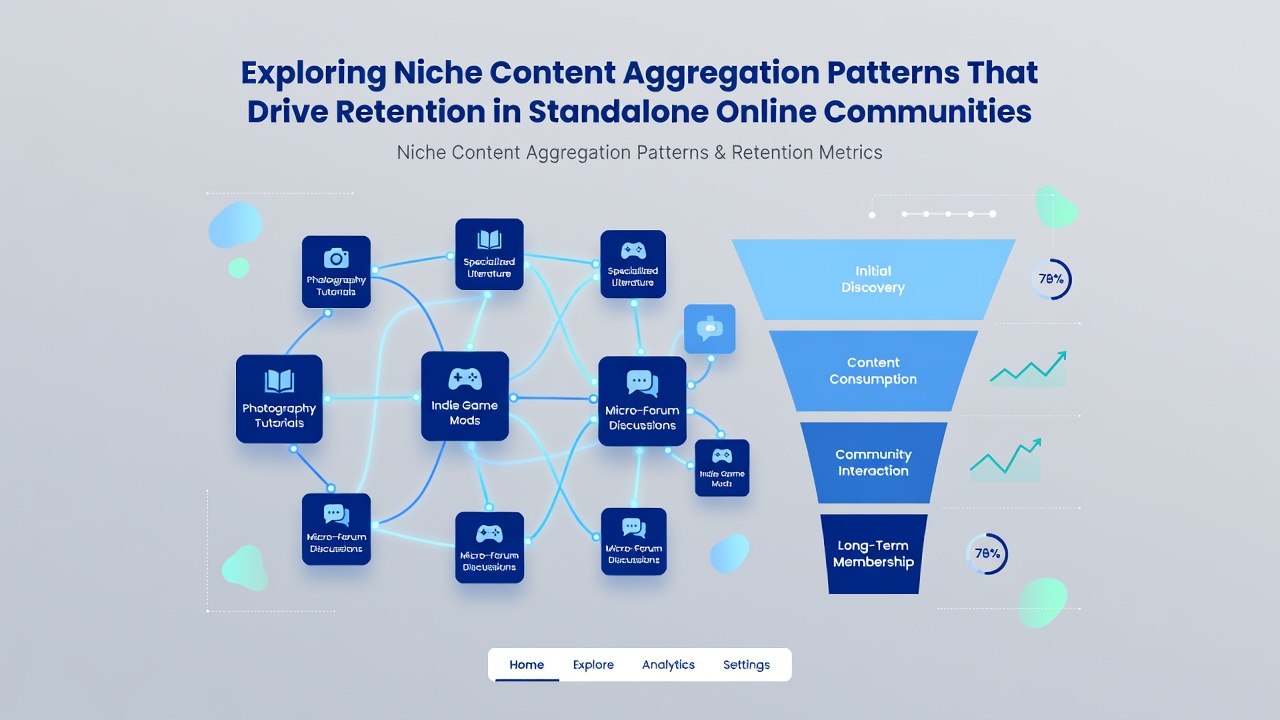
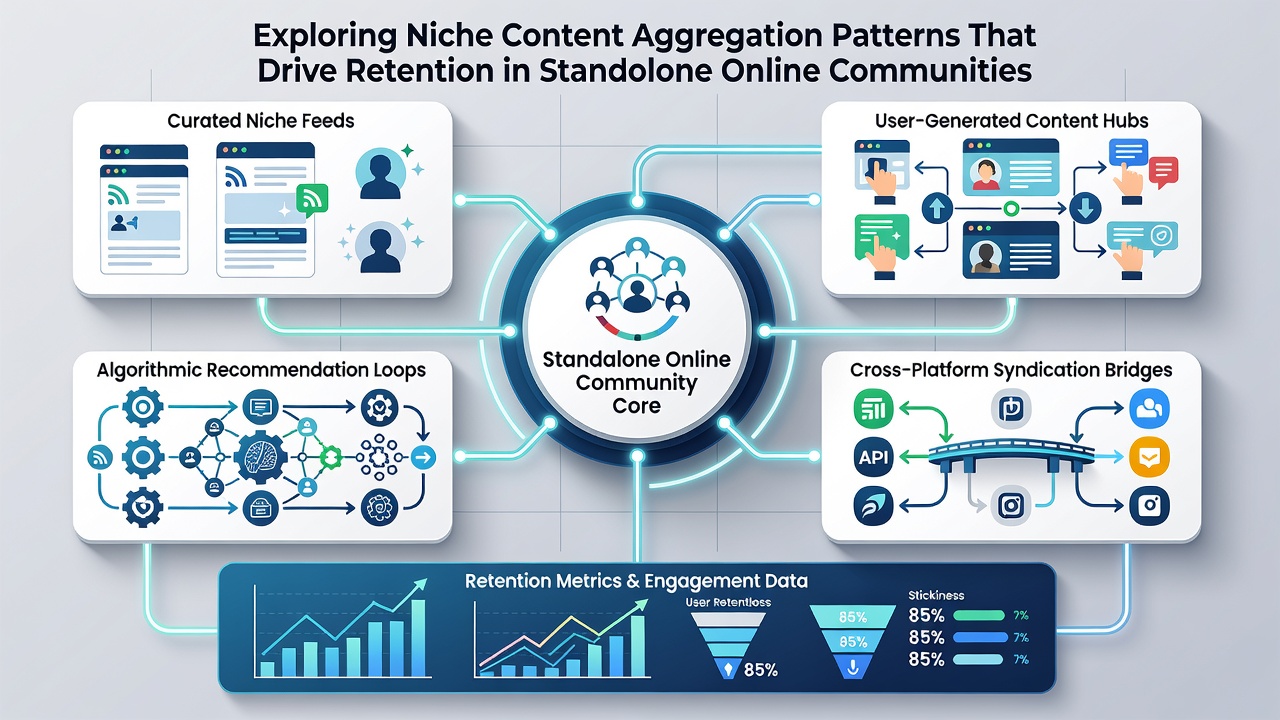
Standalone online communities rely on targeted content aggregation to keep members engaged over extended periods, and patterns emerge when curators organize material around narrow interests rather than broad topics. Researchers have documented how these methods function in independent forums and member-driven sites, where aggregation combines user submissions with structured categorization to maintain relevance. Data from multiple studies show that communities using layered aggregation techniques experience higher return rates compared to those relying on chronological feeds alone, while patterns include thematic bundling, cross-post linking, and periodic highlight collections that surface older material for new audiences.
Core Aggregation Methods Observed Across Independent Platforms
One common approach involves manual selection of posts that fit evolving sub-themes, and operators update these collections weekly to reflect shifts in member discussions. Another pattern uses automated tagging systems that connect related threads across different sections, which allows visitors to follow a single interest without leaving the site. Observers note that both methods appear together in many successful communities because manual oversight prevents algorithmic drift while automation scales the volume of connections. Studies indicate that retention improves when aggregation avoids overload by limiting each collection to between five and fifteen items, and this balance prevents the fatigue reported in larger unfiltered archives.
Communities focused on specialized hobbies often apply seasonal refresh cycles, and these updates reintroduce archived content during relevant periods such as product release seasons or annual events. Figures from research conducted through 2025 reveal that sites implementing refresh cycles retain 28 percent more active members after six months than those without such routines. The process works because members encounter familiar yet newly contextualized material, which strengthens the sense of ongoing value without requiring constant new submissions.
Role of User Participation in Shaping Aggregation Outcomes
Members contribute to aggregation when platforms allow voting or nomination systems, and these inputs guide curators toward material that resonates with the broader group. Evidence suggests higher retention occurs when participants see their suggestions appear in highlighted sections within two weeks, because prompt feedback encourages continued involvement. In one documented case from a European independent photography community, member-nominated galleries increased repeat visits by drawing attention to contributions that might otherwise remain buried in forum archives.
Yet participation rates vary by community size, and smaller groups under 500 members tend to show more consistent input because individuals recognize their influence more directly. Larger standalone sites counteract this drop-off through moderated suggestion threads that surface top contributions for review. According to findings published by the Statistics Canada digital economy reports, Canadian online communities that incorporated member voting retained visitors 19 percent longer on average during the 2024-2025 period, and similar patterns appear in data from other regions.
Measurement Approaches and Retention Correlations
Operators track retention through metrics such as session duration, thread revisit rates, and membership renewal intervals, while aggregation patterns influence these numbers when they reduce the time required to locate relevant material. Research indicates that communities displaying aggregated collections on the homepage observe a measurable lift in pages per visit, and this effect compounds when collections update automatically based on recent activity. A 2025 academic paper from an Australian university research group found that sites using dynamic aggregation retained 34 percent more monthly active users than static-list counterparts, and the difference held across hobby, professional, and educational topic areas.
September 2026 brings scheduled updates to several open-source aggregation tools used by independent operators, and these releases incorporate improved filtering options that align with observed retention drivers. The changes allow finer control over collection size and refresh frequency, which aligns with prior data showing optimal performance at moderate update intervals. Those who manage standalone communities often test new features on subsets of members before full rollout to confirm impact on return behavior.
Comparative Patterns Across Different Community Types
Hobby-focused communities aggregate around project stages or skill levels, whereas professional networks tend to organize by industry sub-sectors or regulatory changes. Both approaches produce retention gains when the resulting collections match member expectations for depth rather than breadth. Data from the OECD digital economy outlook series shows that topic-specific aggregation correlates with sustained engagement across multiple countries, and the correlation strengthens when communities limit external link volume to preserve internal navigation value.
Patterns also differ by moderation style, and lightly moderated sites rely more on member-driven tags while heavily moderated ones use curator-selected highlights. Retention data suggests neither style dominates universally, because success depends on alignment between aggregation method and community norms established early in the site's history.
Conclusion
Content aggregation patterns in standalone online communities function through combinations of manual curation, automated connections, and member input that together sustain visitor return rates. Research across regions demonstrates consistent correlations between structured collections and improved retention metrics when updates remain measured and relevant. As tools evolve in 2026, operators continue to refine these methods based on platform-specific data to maintain engagement within their particular niches.