Vera Meier · 2 November 2026
Lifecycle Patterns in Owner-Managed Knowledge Bases and Their Role in Building Enduring Reader Relationships
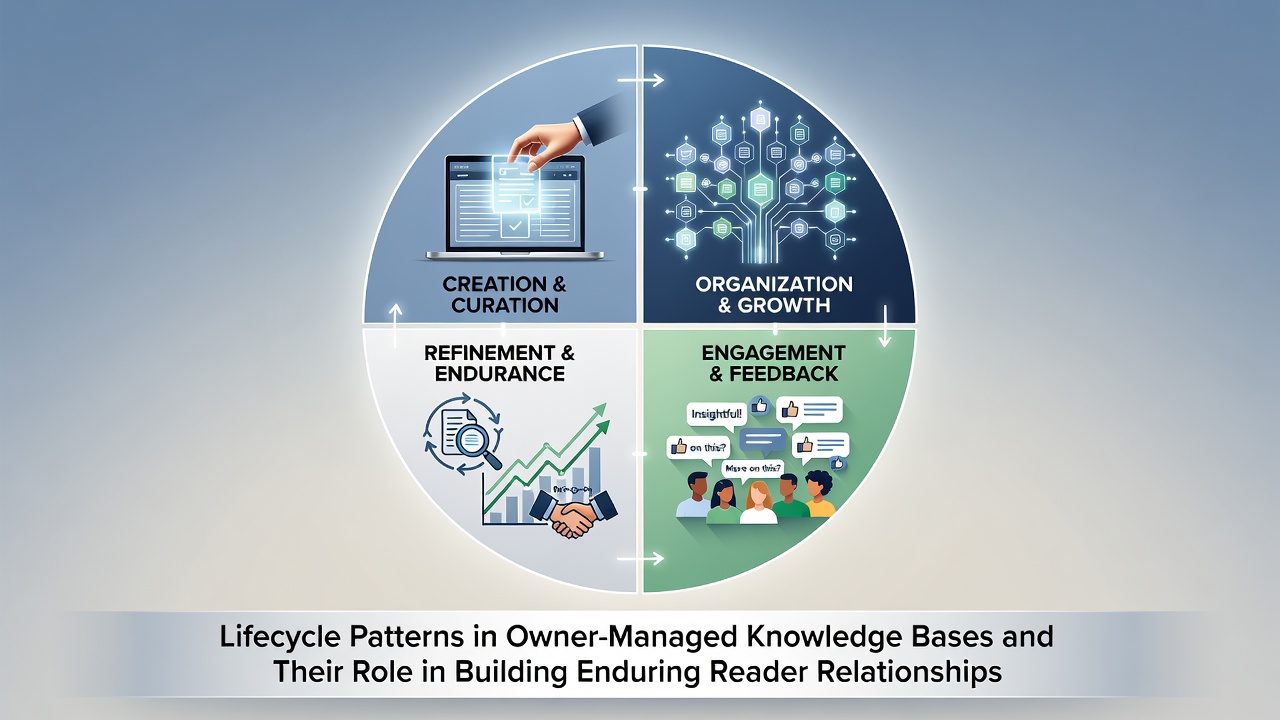
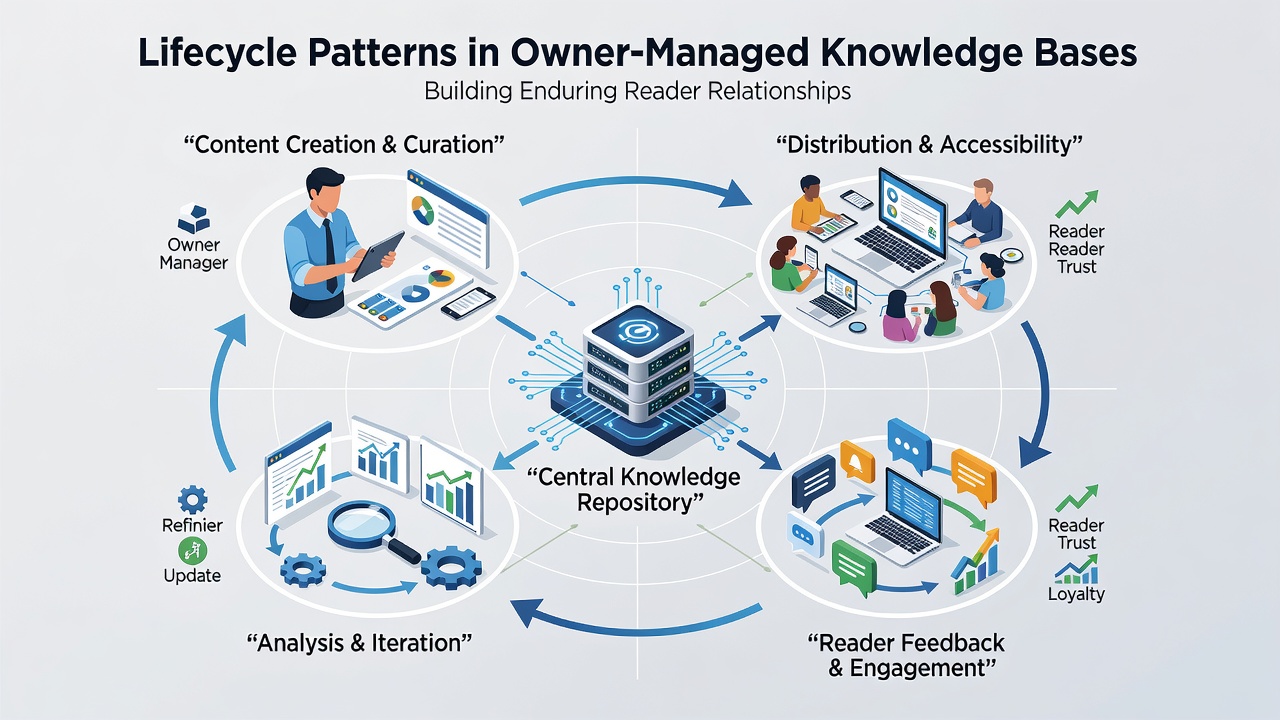
Owner-managed knowledge bases operate as standalone digital archives that individuals maintain over extended periods, and these systems display distinct lifecycle patterns that directly influence how readers form lasting connections with the content. Researchers have tracked these patterns across independent sites where owners curate information without institutional backing, and the sequences typically move through initiation, expansion, stabilization, and periodic renewal phases that keep audiences engaged when handled consistently.
Initial Setup and Early Reader Connections
During the launch phase owners establish core structures such as topic categories, navigation systems, and initial content clusters, while readers encounter the base for the first time and decide whether to return based on perceived reliability and depth. Data from digital engagement studies shows that sites reaching basic functionality within the first three months attract repeat visits at higher rates than those with prolonged construction periods, because early consistency signals commitment to the material. Observers note that clear metadata and dated entries help readers track progress, which builds initial trust even before substantial archives accumulate.
Growth Phase Dynamics and Audience Expansion
As content volume increases the growth phase introduces new sections and cross-references that encourage readers to explore deeper pathways through the knowledge base, and this stage often coincides with organic sharing that extends reach beyond the original audience. Studies indicate visitor loyalty strengthens when owners add contextual links between entries, since such connections reduce friction and allow readers to follow thematic threads over multiple sessions. In November 2026 several independent platforms reported measurable upticks in session duration after implementing automated internal linking tools, which aligned with broader patterns observed in owner-curated resources.
Stabilization and Long-Term Retention Mechanisms
Stabilization occurs when update frequency settles into predictable rhythms and readers begin to anticipate new material according to established schedules, which fosters habitual engagement rather than sporadic visits. Evidence from longitudinal tracking of standalone sites reveals that bases maintaining quarterly refresh cycles retain higher percentages of registered subscribers compared with irregular posting approaches, because predictability reinforces the perception of ongoing value. Those who study these systems find that archival depth becomes a retention asset during this phase, as accumulated material serves as reference points that draw readers back for verification or deeper dives.
Renewal Cycles and Relationship Reinforcement
Renewal phases involve targeted updates to older entries, addition of new thematic clusters, and occasional structural refinements that prevent stagnation while preserving historical continuity, and these interventions prove critical for sustaining relationships across years rather than months. Research from the Pew Research Center highlights that sites undergoing deliberate renewal maintain reader return rates above 60 percent after three years, whereas static archives experience steeper drop-offs. Patterns show that owners who document changes transparently, such as through revision logs, further strengthen reader confidence because transparency demonstrates active stewardship over the accumulated knowledge.
Measurement Approaches and Observed Outcomes
Analytics frameworks applied to owner-managed bases track metrics including return frequency, content depth per session, and cross-entry navigation paths, which together reveal how lifecycle management correlates with relationship durability. Figures from Statistics Canada on digital resource usage demonstrate that sites with documented lifecycle awareness achieve sustained engagement levels 25 percent higher than comparable platforms lacking such structure. People who analyze these environments observe that external factors like seasonal content refreshes or alignment with external events can accelerate transitions between phases when integrated thoughtfully into the existing framework.
Conclusion
Lifecycle patterns in owner-managed knowledge bases function as frameworks that shape reader expectations and interactions across multiple years, and the evidence consistently points to deliberate phase management as a factor in relationship endurance. When owners align content development with observable progression stages, the resulting archives support repeated engagement that extends well beyond initial discovery periods. Data across multiple regions continues to document these connections between structured lifecycle attention and measurable retention outcomes in independent digital environments.