Leon Jenkins · 5 October 2026
Unpacking Visual Storytelling Techniques That Enhance Depth in Solo-Curated Online Archives
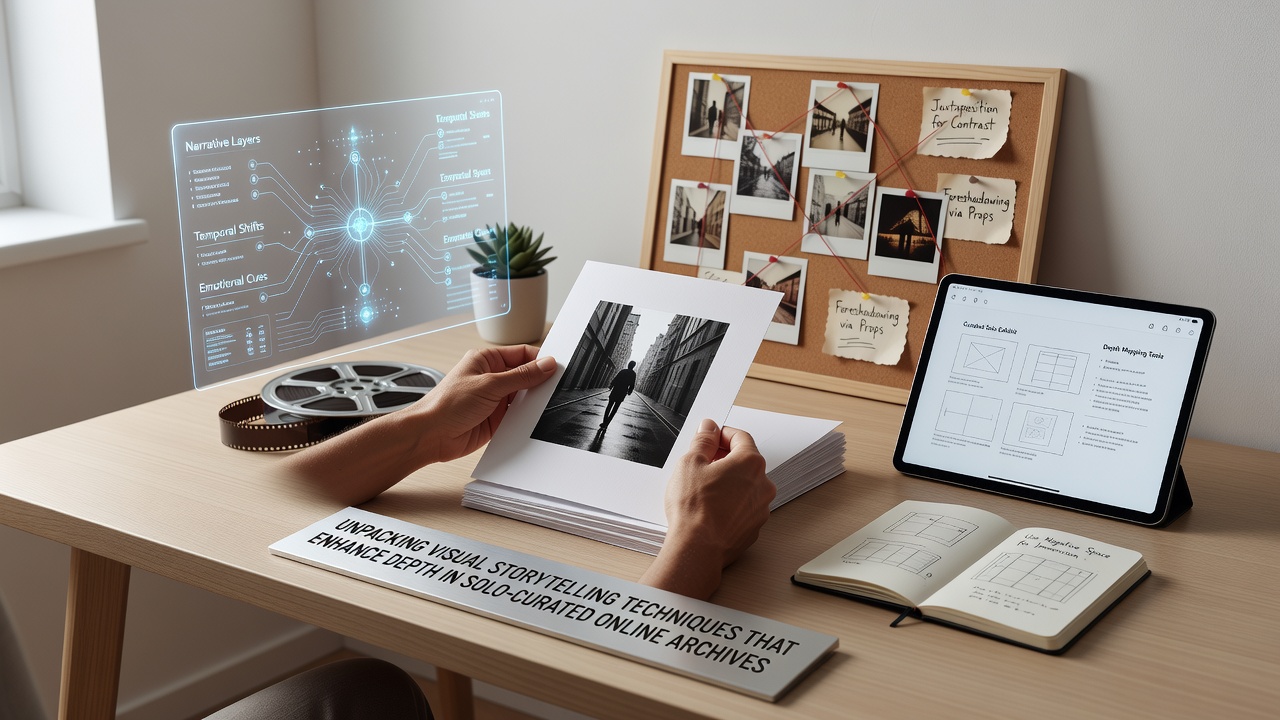
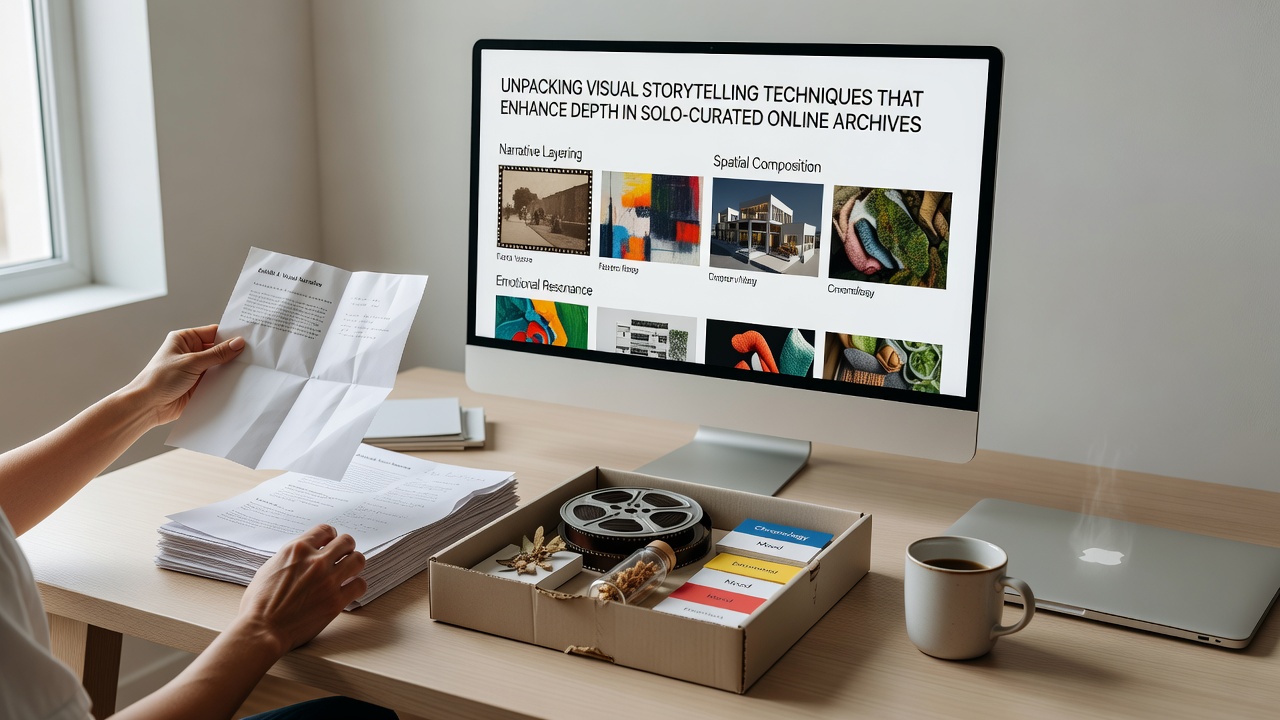
Visual storytelling in solo-curated online archives relies on deliberate selection and arrangement of images, graphics, and interactive elements that build narrative layers around primary materials, and researchers have documented how these approaches add contextual dimensions that static text alone cannot provide. Solo curators often manage personal collections spanning decades of documents, photographs, and ephemera, turning them into accessible digital spaces where sequence and composition guide visitors through interconnected stories.
Core Components of Visual Depth in Digital Archives
Techniques begin with composition choices that establish spatial relationships between items, such as placing related artifacts side by side to highlight contrasts in scale or era, while data from digital preservation studies shows increased dwell time when curators apply these juxtapositions consistently. Layering occurs through overlaid annotations, semi-transparent maps, or embedded video clips that reveal additional information without leaving the main view, and archives maintained by independent researchers demonstrate measurable gains in user return rates when such features appear early in the navigation path.
Color grading and tonal consistency further unify disparate sources into a coherent visual thread, allowing patterns across time periods to surface more readily, whereas abrupt shifts in palette can fragment the experience. Timeline visualizations integrate chronological markers with thumbnail previews, enabling visitors to trace cause-and-effect sequences across multiple decades in a single scroll, adn reports from institutions tracking online heritage platforms note higher completion rates for narrative sequences presented this way.
Interactive Elements and Narrative Flow
Clickable hotspots on high-resolution scans let users reveal metadata or alternate versions of an image, creating branching pathways that mirror teh non-linear nature of historical inquiry. Panoramic views stitched from multiple captures add environmental context around isolated objects, and studies conducted by European digital heritage networks indicate that such immersive formats correlate with longer session durations across varied audience demographics.
Sequential reveals controlled by scroll position or simple sliders introduce information gradually, preventing overload while sustaining momentum through the archive, and curators who apply this pacing report sustained visitor progression from introductory sections into deeper holdings. Sound design paired with static imagery, when used sparingly, introduces another sensory channel that reinforces emotional resonance without dominating the visual focus.
Regional Approaches and Platform Adaptations
Curators in North America frequently incorporate geospatial overlays that link documents to specific locations, drawing on datasets from government mapping services to situate personal collections within broader landscapes. In contrast, practitioners across Asia-Pacific regions often emphasize generational portrait series that use consistent framing and lighting to underscore continuity and change within family or community records.
Platform constraints shape technique selection, with lightweight sites favoring static composites and CSS-driven transitions, while those hosted on more robust frameworks support 3D object rotations or augmented overlays. Observers tracking independent archive growth through 2025 and into October 2026 note steady adoption of responsive image sets that maintain detail across device sizes, preserving the integrity of fine visual cues regardless of access method.
Measuring Impact Through Engagement Metrics
Analytics collected from standalone archive sites reveal correlations between visual complexity and metrics such as pages per session and external referral growth, particularly when techniques avoid clutter and maintain clear focal paths. Library of Congress preservation reports document how structured visual sequences improve discoverability of lesser-known holdings. Comparative data assembled by Europeana research teams shows similar patterns across multilingual collections, where visual anchors reduce bounce rates for non-native language visitors.
Conclusion
Effective visual storytelling in solo-curated archives emerges from the disciplined application of layering, sequencing, and contextual annotation rather than decorative excess, and ongoing platform developments continue to expand the toolkit available to independent practitioners. Those maintaining such collections track how specific techniques influence visitor pathways, allowing iterative refinement that aligns presentation methods with the inherent depth of the materials themselves.